

Welcome fellow Kindergarten teachers I am so glad you have joined me here today. This coming week we will be doing a spider inquiry and I have some fantastic ideas for you to use in your own classrooms. Typically, I would do a spider unit before Halloween but this year has kind of gotten away from me so we are doing it after Halloween.
Scope & Purpose
We will be learning about the parts of a spider, where they live, how they adapt over time and the life cycle of a spider. Additionally we will be learning about how spiders help our environment.
Essential questions:
- What do we notice about spiders?
- How do spiders adapt to their surroundings?
- How do spiders change over time?
- What are the parts of an spider?
- Plus any additional questions that the students generate themselves
List of Suggested Activities
| 1. Read The Spider National Geographic Readers: Spiders – YouTube | Create a K/W/L chart to begin the inquiry Talk about the Life Cycle of a Spider as a Whole Class (set up spider life cycle provocation for tomorrow) |
| 2.Read The First Mosquito Caroll Simpson https://www.youtube.com/watch?v=E7ZTIsY7wvM | Talk about what things spiders eat. Are spiders helpful to have around in our houses? Why or why not? |
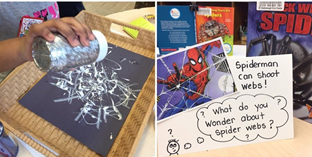
| 3. Read the Very Busy Spider by Eric Carle | Discuss how a spider makes a web. What are is spider webs made of. Watch the are spider webs stronger than steel video. https://www.youtube.com/watch?v=eXppg5vcXIQ Build and test our own spider webs |
| 4. Read The Spider by Elise Gavel | Are spiders a misunderstood animals. Brainstorm all the ways that spiders help the Earth. Directed draw of a spider and label all the parts of a spider. |
| 5. Read “The Diary of a Spider by Doreen Cronin | Write a letter or journal entry telling your story as a spider. What are some things you do during the day. |
| 6. Read “Aaargh Spider” | Go on a spider hunt outside. Catch the spider in the bug viewer. Make sure we return the spider to where they came from. Add any new ideas and learning to the K/W/L chart |
| 7. Read “Are you a Spider?” https://www.youtube.com/watch?v=p_RpT-jTRks | What are the features that makes a spider a spider? Brainstorm all the features of spiders. Spider/ Insect sorting activity. Add any new learning to the K/W/ L chart |
| 8. Read “The Next Time you see a Spiderweb” https://www.youtube.com/watch?v=YjnQYiPkYiQ | Spiderweb STEAM challenge. In small groups or partners give out materials and students need to design and test their spiderweb to see how much it can hold. |
| 9. Read The Icky Bug Alphabet https://www.youtube.com/watch?v=b_cgFPwkjdo | Spider craft activity |
| 10. Read “There was an Old Mummy who Swallowed a Spider” | Writing activity. Write from the perspective of a spider what would you swallow if you were a spider? |
| 11. Read “I’m Trying to Love Spiders” | In partners or small group students can use any forum. Art/ drama/science etc to convince the class that to squish the spider or save the spider. |
Suggested books:

This book is a great non fiction book to start the inquiry with to build a basic understanding of spiders. After reading add any new ideas to to the K/W/ L chart and create the life cycle of the spider together as a class. Tomorrow put the book out at a table with materials and pictures to recreate the life cycle of a spider. This picture packs tons of learning into the illustrations as well as the text and it is one of those ones that students pick up again and again to look through.

It is hard to go wrong with Eric Carle. His illustrations always inspire so much artistic creativity. His books inspires you to think of how busy spiders are and how they help us. However something about reading Eric Carle always inspires you to pull out your paints or pastels and create your own art. I would use this to start the conversations and experiment on how strong a spider web is. I would also put this books out at the art table with some art supplies and see what it inspires students to do during Table Time or Centres for an Art Provocation for the week.

I love how the illustrator combined so many facts about spider but also managed to convey the feelings of the spider. Throughout the entire book you can not help but feel sorry for the spider because all they are trying to do is be helpful. I would use this story at the end of the unit to start a conversation on what would you do in that situation. Are spiders helpful or not?
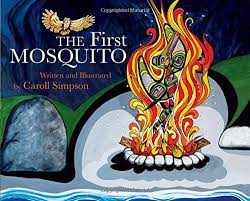
The illustrations in this story are phenomenal and they inspire so much creativity and imagination. There is so much happening in just the illustrations. I would use this story to begin the conversation to thinking about what kinds of things spiders do eat instead of just mosquitoes.
Additional Books:
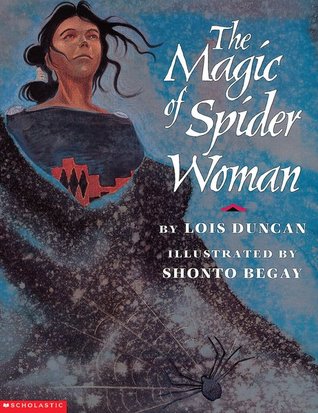
The Magic of Spiderwoman


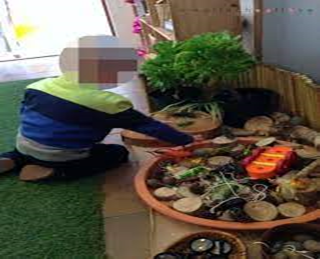
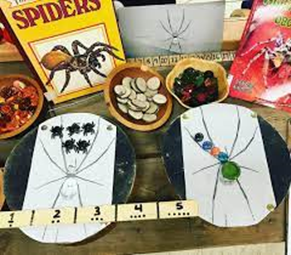
Small Group Ideas & Provocations
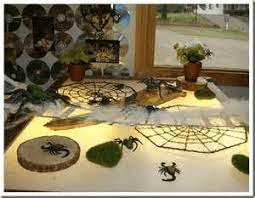



 Kindy Play